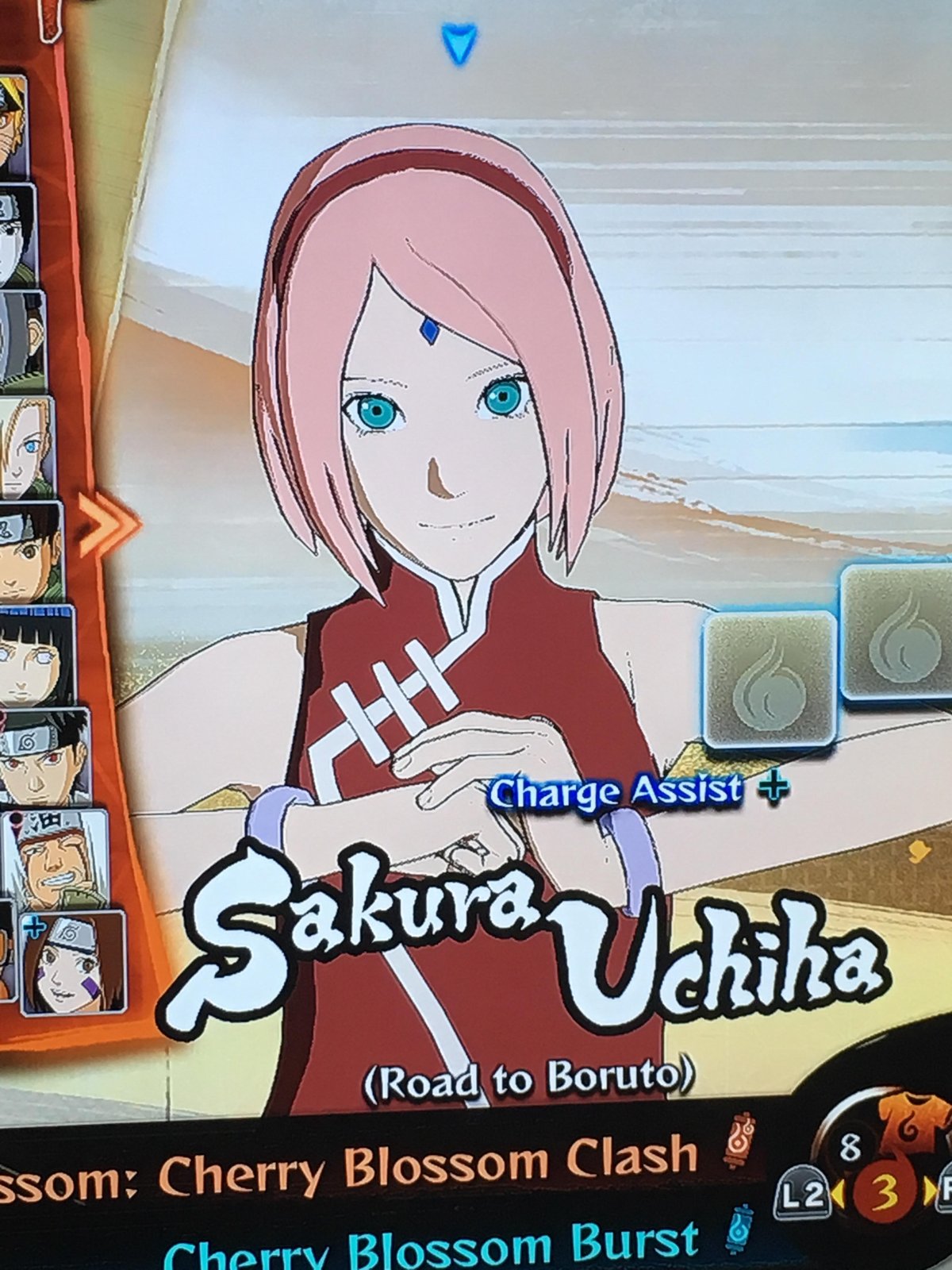
From her earliest days as a passionate, yet initially naive kunoichi-in-training, to her ultimate status as one of the Hidden Leaf Village's most formidable medical ninja and a loving mother, Sakura Haruno's journey is nothing short of remarkable. She stands as a foundational pillar of Team 7, a crucial force alongside Naruto Uzumaki and Sasuke Uchiha, and a character whose evolution has captivated millions worldwide. Her story is one of perseverance, self-discovery, and the relentless pursuit of strength, both physical and emotional.
For many, Sakura's path embodies the very spirit of the Naruto series: the transformation from weakness to power, from dependence to self-reliance. She isn't just a supporting character; she's a testament to what dedication and the right mentorship can achieve. If you've ever wondered about the depth behind her character, her pivotal role in critical moments, or the controversies that have sometimes surrounded her, you've come to the right place. We're here to thoroughly explain Sakura Haruno, helping to clarify every facet of her enduring legacy.
Unpacking Sakura's Origins: From Concept to Konoha
When Masashi Kishimoto first conceived Sakura Haruno, he envisioned a "normal girl" who might struggle with understanding men, aiming to reflect common human personality traits rather than creating an immediate heroine. Her early design was kept intentionally simple, with features like her broad forehead (a characteristic Kishimoto sometimes overemphasized) and practical leggings reflecting her active nature. This foundational simplicity laid the groundwork for the complex character she would become, initially serving as a more grounded perspective within the extraordinary world of ninjas.
This initial vision of a relatable, albeit initially insecure, young girl set the stage for her incredible growth. To dive into the fascinating details of Sakura Haruno's character design and how it evolved across the series, our dedicated guide offers a deep examination of Kishimoto's artistic choices and their impact.
Her Early Role and the Seeds of Growth in Part I
In the beginning, Sakura was often defined by her deep infatuation with Sasuke Uchiha and her dismissive attitude towards Naruto Uzumaki, who himself harbored feelings for her. She lacked a tragic backstory, distinguishing her from many of her peers, and initially relied heavily on her more combat-focused teammates. However, glimpses of her potential were evident; Kakashi Hatake quickly recognized her excellent chakra control.
A pivotal moment for Sakura arrived during the Chunin Exams, where she realized her over-reliance on others and resolved to improve her own ninja abilities. This self-awareness marked the true beginning of her journey toward becoming an independent and capable kunoichi. Her early struggles and eventual commitment to self-improvement are crucial to understanding her later achievements. You can unravel her entire character arc from Part I to fully appreciate the foundations of her development.
The Transformation: Awakening Power and Purpose
Sakura's most significant transformation began after Sasuke's defection. Realizing her limitations and determined not to be a burden, she sought out the Fifth Hokage, Tsunade Senju, and began a rigorous two-and-a-half-year apprenticeship. This period of intense training was nothing short of revolutionary for her character, fundamentally altering her capabilities and her standing within the ninja world.
Under Tsunade's tutelage, Sakura blossomed into one of the most experienced and powerful medical ninjas, capable of healing severe wounds and even performing complex surgical procedures on the battlefield. Beyond healing, she also developed formidable superhuman strength, achieved by channeling precise amounts of chakra into her fists, making her a devastating force in close combat. Her ultimate display of chakra control came with the awakening of the Byakugō Seal, a powerful jutsu that stores vast amounts of chakra and grants immense regenerative abilities.
To explore the full spectrum of Sakura Haruno's abilities and powers as they evolved throughout the series, we have a detailed guide waiting for you. For those fascinated by her healing prowess, you can delve deeper into the intricacies of Sakura Haruno's medical ninjutsu to understand its mechanisms and importance.
Sakura's Unwavering Role in Part II and Beyond
Rejoining Team 7 in Part II, Sakura's growth was immediately apparent. She played a critical role in numerous missions, showcasing her new strength and medical expertise. Her battle against the Akatsuki member Sasori, fought alongside Elder Chiyo, is a prime example of her combat prowess and strategic mind. Throughout the Fourth Ninja War, she was an indispensable medical ninja, saving countless lives before joining Naruto and Sasuke on the front lines against the Ten-Tails, demonstrating her unwavering resolve and strength.
Her protective instincts toward Naruto grew as she learned of his hardships with the Nine-Tails, and despite her enduring love for Sasuke, she resolved to stop him when his path became too dangerous. In the epilogue, Sasuke finally acknowledged her feelings, a powerful moment that solidified their bond before he departed on his journey of redemption. If you're looking to revisit some of Sakura's strongest moments that define her legend, our curated list covers her most impactful contributions.
The Heart of Team 7: Relationships and Family
Sakura's relationships are central to her character, particularly her dynamic with Naruto and Sasuke. Her journey from being captivated by Sasuke's mystique to forming a deep, complex bond with him — eventually marrying him and becoming Sakura Uchiha, mother to Sarada — is a narrative thread that spans the entire series. Her initial dismissiveness of Naruto evolved into a profound friendship, built on mutual respect, trust, and shared hardship. They became an unbreakable trio, a family forged through countless trials.
Understanding these intricate connections is key to appreciating Sakura's character fully. For a comprehensive look at how their bond evolved, you can understand the complex dynamics of Sakura Haruno and Sasuke Uchiha's relationship. Likewise, to appreciate the unwavering support and camaraderie she shared with the series' protagonist, be sure to explore the nuanced friendship between Sakura Haruno and Naruto Uzumaki.
Beyond the Manga: Sakura in Other Media
Sakura's influence extends far beyond the pages of the manga and the main anime series. She has been a constant presence across Naruto's expansive multimedia franchise. She appears in all eleven Naruto feature films, from Ninja Clash in the Land of Snow (2004) to Boruto the Movie (2015), consistently playing a significant role. She’s also featured in all three original video animations and is a playable character in nearly every Naruto video game, where players can experience her unique combat style, often utilizing her "Inner Sakura" personality and various genjutsu.
Her character's development and updated designs, particularly her Part II and post-Part II appearances, were prominently featured in popular video game titles like Naruto Shippuden: Ultimate Ninja Storm 4. The 2015 light novel Sakura Hiden: Thoughts of Love, Riding Upon a Spring Breeze offers a deeper dive into her life as a celebrated medical ninja, showcasing her efforts to open a mental clinic while navigating a conspiracy and Sasuke's redemption. If you're curious to check out all of Sakura Haruno's appearances beyond the main manga and anime series, we've compiled a complete guide.
Reception and the Enduring Conversation
Sakura Haruno has consistently been a character who sparks conversation, earning both immense praise and considerable criticism throughout her run. Her popularity has remained high, frequently ranking in the top ten of Weekly Shōnen Jump polls, and notably securing the third spot in the first global Naruto poll in 2023, making her the most popular female character. This enduring appeal is reflected in the vast array of merchandise created in her likeness, from action figures to keychains.
Praise for Sakura often centers on her evolution from a stereotypical shōnen love interest to a strong, independent female character. Critics have applauded her growth into a more active participant in battles, particularly highlighting her strategic prowess against Sasori and her mature reactions to Sasuke's complex journey. Her commitment to becoming a powerful medical ninja, rather than simply relying on others, resonates deeply with fans who value character development.
However, Sakura has also faced her share of criticism and controversy, particularly in the early stages of the series. Some fans initially labeled her as "useless" or emotionally unstable, a sentiment often amplified by Studio Pierrot's anime adaptation, which some argue distorted her character by increasing the frequency of her physical aggression and reinforcing a "hysterical girl" stereotype. Scholars suggest much of this criticism stems from a misunderstanding of her age and narrative role, as Kishimoto himself admitted struggling to write strong female characters, aiming for a more realistic portrayal of teenage insecurities. Nonetheless, her character has evolved past these initial hurdles to become a truly beloved figure.
To fully uncover the root causes of Sakura Haruno's controversies and criticisms and gain a balanced perspective, our in-depth analysis breaks down the arguments. Furthermore, to fully grasp her journey in public perception, you can analyze Sakura Haruno's fan reception and popularity through the years and understand why she remains a fan favorite.
Sakura's Enduring Legacy
Sakura Haruno's journey from a young, insecure kunoichi to a powerful, compassionate medical ninja and pivotal member of Team 7 is a testament to growth, dedication, and the power of finding one's own strength. She's a character who has faced challenges head-on, evolved dramatically, and carved out an indispensable role in the Naruto universe, ultimately becoming a hero in her own right. Her story continues to inspire and resonate, proving that true strength often lies in perseverance and an unwavering heart.